
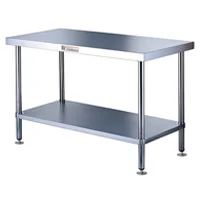
CKB Solutions directly compares modular vs custom stainless steel benching for commercial kitchens in Tasmania, covering fit, workflow and cleaning access.
Commercial kitchen operators can lose valuable preparation space when standard benches do not align with walls, appliances, service points or staff movement. Comparing modular vs custom stainless steel benching helps determine whether standardised units, measured fabrication or a combination will provide the most practical fit. The decision affects workflow, cleaning access, storage and future layout changes, so it should be made before equipment positions and services are finalised.
Which Benching Option Suits a Commercial Kitchen?
Neither modular nor custom stainless steel benching is universally better, as the right choice depends on the room layout, equipment, budget and future operational needs. Modular benches suit straightforward spaces where standard dimensions work, while custom fabrication is better for corners, columns, uneven walls, sinks and specific equipment openings. A mixed approach can also be practical, using modular benches in standard areas and custom units where precise fabrication is required. Modular benches in open preparation areas and custom units at complex workstations.
What Food-Premises Requirements Affect Benching?
Benching must be fit for its intended use and must support effective cleaning rather than merely looking suitable for hospitality work. The FSANZ requirements for fixtures, fittings and equipment state that food-contact surfaces must resist absorption, avoid contaminating food and be capable of effective cleaning and, when necessary, sanitising.
- Surface condition: Specify smooth, impervious surfaces without cracks, grooves or rough joints that can hold debris.
- Cleaning access: Allow staff to reach beneath, behind or beside the bench and nearby equipment.
- Wall junctions: Provide adequate clearance for cleaning or seal fitted benches against adjoining surfaces as appropriate.
- Open sections: Avoid unsealed tube ends, cavities and crevices that could harbour dirt or pests.
- Services: Coordinate sinks, water and drainage positions before production and installation work begins.
- Use requirements: Confirm dimensions, load needs, storage and exposure to cleaning products before ordering.
When Is Custom Fabrication Worth the Additional Coordination?
Custom benching is most defensible when standard modules would waste usable space, interrupt a working run or create difficult interfaces around fixtures. It may accommodate integrated sinks, splashbacks, undershelves and equipment cut-outs when these features are required by the project design. Our stainless-steel benching range covers modular flat packs through to benches designed and manufactured for a specific application.
Before ordering, compare measured dimensions, construction, storage, access routes, service connections and how staff move between preparation, cooking, plating and washing zones. Reviewing our project process early can help align design, custom component production, equipment purchasing and installation. Initial price should be weighed against fitting work, cleaning access and the cost of replacing a poorly matched bench later.
CKB Solutions for Modular vs Custom Stainless Steel Benching
At CKB Solutions, we supply and install stainless-steel benching for commercial kitchen and bar projects, from modular flat packs to designed-to-suit applications. We assess the room, equipment and workflow so clients can identify where standard units are sufficient and where measured fabrication adds practical value. This approach can control unnecessary custom work while addressing stations that genuinely need a more precise fit.
Request an assessment covering dimensions, configuration and installation requirements for your Tasmanian hospitality project.